UI/UX Design Trends in 2026

Yellow Slice
Table of Contents:
- Introduction
- What is Driving UI/UX Design Trends
- Top UI/UX Design Trends in 2026
- How These Trends Impact Businesses
- How YellowSlice Is Helping Brands Lead the UI/UX Revolution in 2026
- Where UI Meets the Future
- FAQs on UI/UX Design Trends in 2026
The way we use apps and websites is changing faster than before. Just a few years ago, having a clean-looking interface was enough. But now the app you use every dayyou want that app to understand you, respond quickly, and make life easier without making you think too much. That is the place where UI/UX design trends came into practice.According to some data, 94% of the users first impression related to the website is based on its UI/UX designs, and 47% of the users want their mobile experiences to be perfect without any distractions. Yellow Slice helps you in every manner to give your website a user-friendly look. In this blog, you will come to know about the emerging UI/UX design trends in 2026 in detail.
What is Driving UI/UX Design Trends
In todays times UI/UX design is not about looks and experiences only. It is more about evolving AI and automated features within the layouts that feel eye-catching. AI is no longer optional, as people want interfaces that will adapt to real-time user behavior, intent, and emotional aspects. Today, they expect the app to understand them. They do not want to think, wait, or struggle; rather, they want things to work smoothly and instantly.They want those layouts that automatically switch to voice, expression, touch, stare, and typing features as per the individual needs in a single experience. The design should be user-centric and ethical and benefit their experience instead of ruining it. With this predictive approach, it automates those results that the user wants to see. We now have wearables, voice assistants, smart TVs, car screens, and even AR experiences. So designers have to think beyond screens and start thinking about experiences across varied viewpoints.Are You Aware Of?Yellow Slice makes human-centric and impact-focused designs that uplift your business with their innovative designs. Many brands, like Chaayos, Croma, Hungama, Qusett, etc., have made their interfaces trending with the help of Yellow Slice's latest technologies and AI-driven layouts.
Top UI/UX Design Trends in 2026
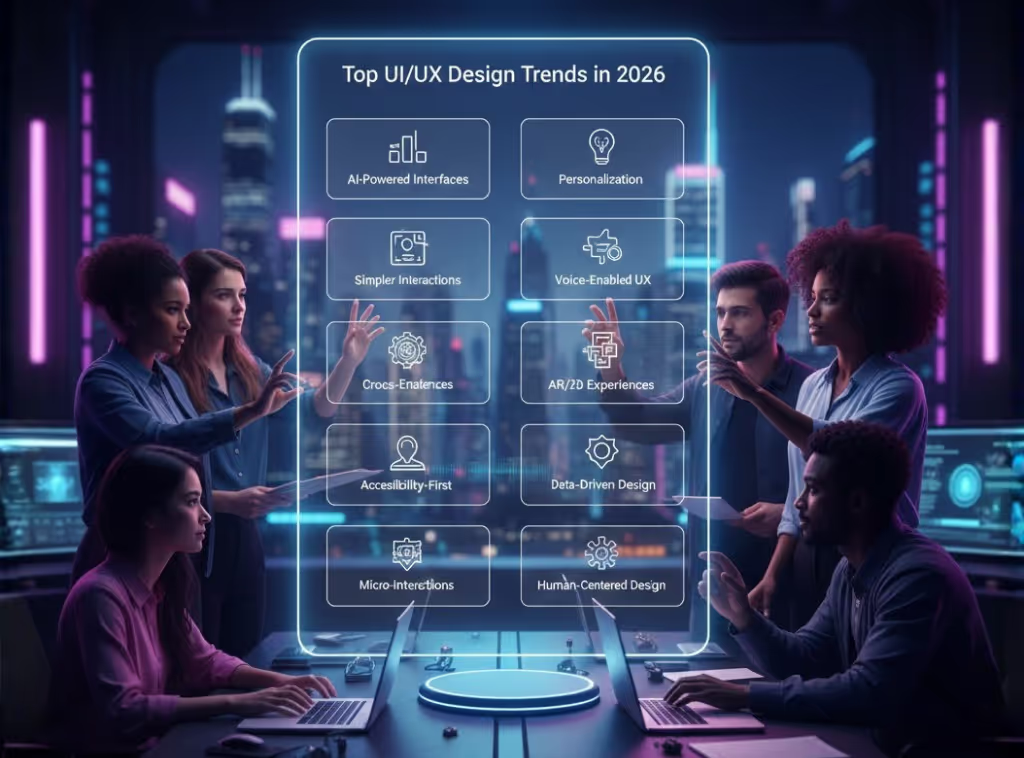
UI/UX in 2026 is about making products feel simple, smart, and natural to use. People lack patience nowadays, so they want layouts to guide them. AI being a part of everyday work has decreased the workload with many automations. These automations have merged well with UI/UX designs. The top trends in 2026 are as follows:
1. AI-Powered and Adaptive Interfaces
Apps are becoming more flexible and more aware of the users' needs in present times. Instead of one complex interface, there are adaptive and AI-powered layouts now. Apps and websites get developed so much that they get changed as per the consumer preferences. Two people can use the same product and still have very different experiences, as it depends on these factors:
- User behavior
- Preferences
- Usage patterns
- Context (time, location, device)
2. Personalization That Feels Natural
Personalization is now a new feature. It existed before 2026 too, but now it is more updated and subtle according to changing trends. When you surf any app or website, you surf as per your choices, as it predicts all the further steps by itself. It reorders content based on what you use most and shows shortcuts for what you need right now. These personalized features remember how you like to work and what you search the most so that it can recommend similar results only.
3. Simpler Interfaces with Smarter Interactions
Those minimal designs are trending, and they are purpose-driven. Removing elements does not mean you are making a simple layout; simple interfaces mean making an interface that guides you in every step, is easy to use, and is people-friendly. It means removing confusion in every button, every screen, and every step that is being questioned: UI/UX designers are now focusing on:
- Clear layouts.
- Fewer steps to complete tasks.
- Helpful micro-interactions that guide users.
- Small animations that explain whats happening.
4. Conversational and Voice-Enabled Experiences
The way you used to interact with websites or apps has changed with time. Now typing and clicking wont have any effect. People are shifting towards voice-enabled systems that do not place writing anywhere. Many apps now have features like voice commands and chat-style interfaces. Users can search, ask questions, complete tasks, or get any help by talking or typing in a conversational way. This is a very useful feature, as people can do multitasking while they are cooking, driving, and so on.
5. Cross-Device Experiences
Users do not use one device nowadays. They switch to phones. laptops, tablets, watches, TVs, and car screens. Every screen is designed in a way that feels simple and decluttered, and people can easily understand different features of different screens. You can start a task on one device and finish it on another without even thinking about it, as everything feels connected. Now UI/UX design is all about the journey, not about the screens that support only one layout.
6. Accessibility-First and Inclusive Design
Accessibility has become the core part of UI/UX designs. Companies are designing products in a way that works well for everyone, including those people with visual, motor, or cognitive challenges. Products are designed with
- Better contrast and readable text
- Clear navigation
- Screen reader support
- Clear, focused interfaces
- More forgiving user flows
7. UX with AR, 3D, and Spatial Experiences
Digital experiences have moved beyond the screen in the form of AR/VR as experiences are becoming more visual and more spatial. Many brands are choosing these styles, especially in e-commerce, education, and product demos. Instead of only seeing the product, users can now explore it and interact with it in a more realistic manner. This does not mean that every app will give a 3D effect; it is more about shifting a trend towards more technological aspects and making things look more realistic as they are.
8. Privacy, Trust, and Ethical UX
More and more personal data is collected and used in AI; people are becoming more aware and careful about their needs. Ethical UX means being within the limits of humanity. Trust is no longer just a legal or policy issue. Its becoming a core part of the user experience. It includes:
- Clear permission screens
- Simple privacy settings
- Honest communication
- No confusing or manipulative designs
- No dark patterns or tricks
9. Data-Driven UX Design
Designing a website or an app is no longer based on opinions and assumptions; rather, it revolves around the needs and preferences of the consumers. Companies are using methods like usability testing, behavior tracking, and real data facts to improve their interfaces. Instead of guessing themselves about what suits the customers, they rely on data that is driven by the customers viewpoints. In 2026, UX is not just a creative design; it is a measurable, testable, and continuously improving mechanism.
10. Micro-Interactions and Feedback
Micro-interactions have become the primary source of communication between layouts and users. Small details like button feedback, loading states, and subtle animations make products feel alive, responsive, and trustworthy. It confirms the actions, guides attention, and makes transitions that feel natural and reliable. These animations make the experience of the users friendly with the app, and users return back for its usage.
11. Designing for a Password-Free Future
Passwords are slowly disappearing from the digital world. Apps and platforms are moving toward biometric authentication like fingerprint scans, face recognition, and even voice recognition as the default way to log in and verify identity. Remembering passwords is really difficult, as resetting them feels frustrating. Biometrics has removed the pressure and satisfies apps with reliable protection. You open the app, look at the screen, or touch the sensor, and youre in. Logging in is no longer a step; it is an invisible part of the experience.
12. When Interfaces Start to Feel Human
In 2026 good design is not only about experience; it is more about how people feel while using that app or website. Users interact with the apps when they are busy, stressed, confused, or in a hurry. Emotional and empathetic design is understanding those moments and responding in a more human way. These include:
- Friendly and supportive messages
- Helpful error messages instead of cold technical ones
- Calm visuals during stressful flows like payments or forms
- Thoughtful empty states and loading screens
How These Trends Impact Businesses
1.When an app or website is easy to use, more people sign up, buy, or contact you.2.If it feels good and simple, people keep using it instead of leaving.3.When navigation is clear, users do not get confused and do not need much help.4.New users can learn faster, as it is simple; people do not need training to use it.5.A smooth experience makes businesses look more trustworthy and high quality.6.Good design makes login, payments, and data use feel more secure and reliable.7.Better UX helps you to stand out among your competitors in terms of experience.
How Yellow Slice Is Helping Brands Lead the UI/UX Revolution in 2026
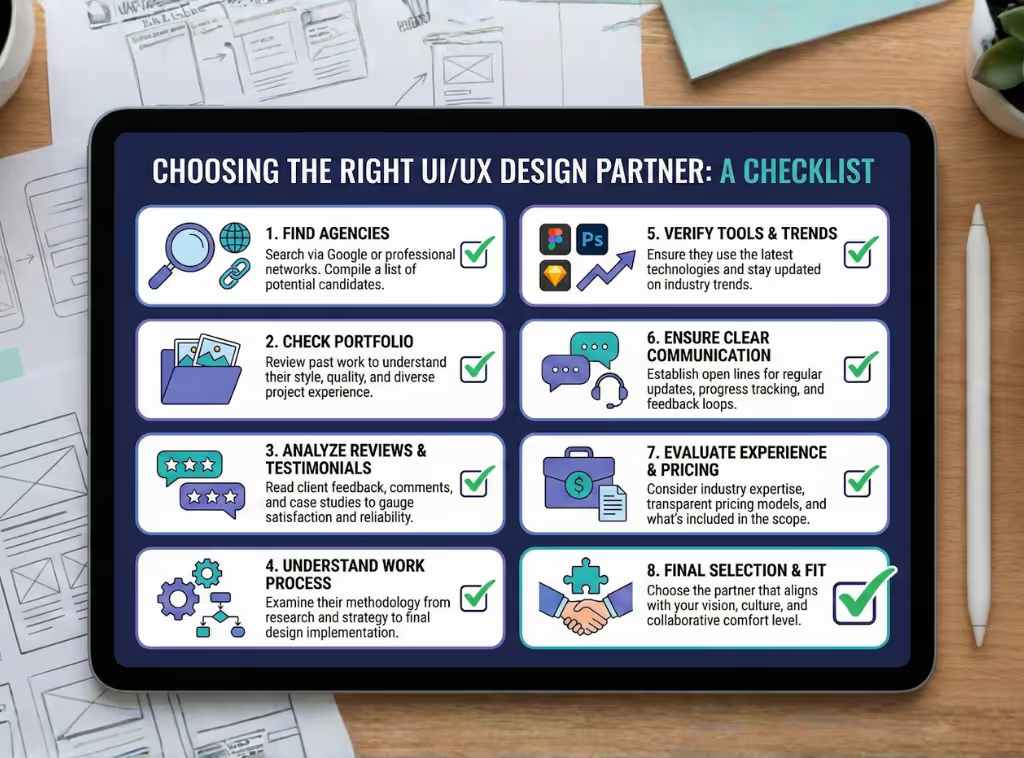
Brands need a design partner that understands business, users needs, and the latest technology together. They must solve real problems, simplify complex systems, and create those interfaces that people enjoy using. Here Yellow Slice comes to the rescue.We do not focus on visuals only; rather, we focus on the growth of your business. With our expertise in SaaS, fintech, healthcare, edtech, and enterprise platforms. Our transparent flows make users feel safer, which is crucial for these industries.Explore how YellowSlices UI/UX experts can help you to build scalable and high-impact digital products for 2026 that align with emerging technology and trends as well.
Where UI Meets the Future
UI/UX design trends in 2026 mean creating experiences that feel simple, thoughtful, and future-ready. Technology is evolving day-by-day, and this brings a challenge for UI/UX design companies to make their interfaces more simple and humanistic. As per the recent trends, the best interface will be that which understands the consumers needs better and gives them the output they want.
FAQs on UI/UX Design Trends in 2026
1. Is UI/UX design still in demand in 2026?
Yes, UI/UX is in demand in 2026, as they are merging with AI and automation, which makes them an important part of todays marketing world. UI/UX makes products easy to understand and gives users their expected results.
2. What industries benefit the most from modern UI/UX designs?
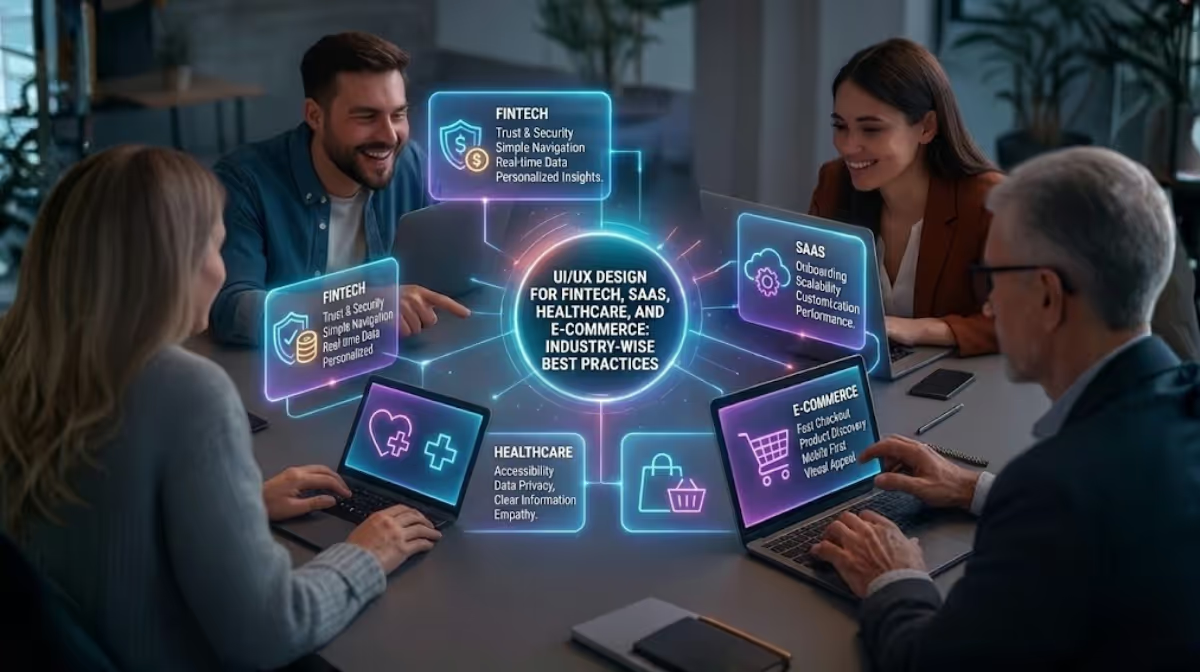
Industries like SaaS, enterprise software, fintech, healthcare, edtech, e-commerce, Web3 & AI products, etc., benefit the most from modern UI/UX designs.
3. Should startups invest in UX early or later?
Startups should invest in UX from day one. In 2026, in a competitive digital market, poor UX can make your brand suffer with huge losses.


Let's create something amazing!
Let's discuss your vision and how we can bring it to life with impactful design solutions.
.avif)
Good design starts with Sliced Newsletter
Subscribe to the Sliced newsletter and get the best of research, UX writing, product psychology, CX, and design systems, right in your inbox.